


SkeeBoost: Ball Arcade Game
4.63.01K Reviews
App Specs
- Version
- 1.9.7
- Updated On
- License
- Free
- Downloads
- 500,000+
- Developer
- Liberty Pixel
- Categories
- Casual
- Platform
- Android
Screenshots


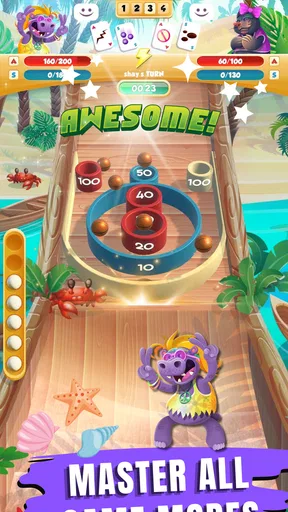





 Analysis by AppCompare
I spent time with SkeeBoost: Ball Arcade Game as a quick, casual arcade game built around the familiar pleasure of rolling toward a target and trying to improve the result. Its simple premise makes it easy to understand almost immediately, but the competitive angle gives each attempt more purpose than a purely solo score chase. You roll, adjust your aim, and try to make better decisions before the short session loses its momentum.
That combination is the main reason I can imagine recommending it to someone who wants a light game for spare moments rather than a large, story-heavy mobile experience. It is free to download, made by Liberty Pixel, and sits in the casual game category. The audience rating is Everyone, so the presentation is positioned for a broad range of players. It has also reached over 500 thousand installs, with a 4.6 average from around 10 thousand ratings, which suggests that the basic idea has connected with a sizeable audience.
How the rolling challenge feels in everyday play
The first thing I noticed is how quickly the game gets to its central action. There is no need to learn a complicated control scheme before understanding what matters. The important moment is the release: I need to judge the direction, commit to the roll, and accept that a small mistake can change the outcome. That makes each turn feel more deliberate than the cheerful arcade presentation might initially suggest.
The Skee Ball influence is useful because it gives the game an instantly recognizable shape. Instead of asking me to memorize a large collection of rules, it asks me to improve a physical-feeling skill. The challenge is not simply tapping as fast as possible. I have to think about placement, timing, and whether a safer attempt is preferable to a more ambitious one. That decision-making is where the game earns its place as more than a disposable reaction test.
I found the short-session format especially convenient. It works well when I have a few minutes while waiting for an appointment, taking a break, or winding down before bed. A round can offer a complete little challenge without demanding the long commitment associated with many competitive mobile games. At the same time, the format can make a loss feel tempting to immediately correct, so it is worth deciding in advance whether I am playing for one relaxed session or chasing a better result.
A useful habit is to treat the first attempts as calibration rather than as failures. I pay attention to how much adjustment is needed for a particular target and avoid changing several things at once. If I alter direction, release timing, and risk level together, I cannot tell which decision helped. Making one adjustment per attempt turns the game into a small practice exercise and makes improvement feel earned rather than random.
That approach also exposes one of the game’s limitations. Players who want deep character development, a long campaign, or a large variety of activities may find the core loop narrow. The appeal depends on whether repeating a focused rolling challenge remains satisfying. I enjoy that concentration in short bursts, but I would not choose it as my only mobile game if I wanted exploration, narrative, or a broad collection of modes.
Worth Reading Before You Choose

EA SPORTS FC Mobile 26 Is a Bigger Football Game, but It Takes Time

Flipboard Shows What News Apps Must Do Beyond the Feed

Switching to Android Auto Means Rethinking Your Driving Routine

Google Calendar Makes a Crowded Week Easier to Manage

Ludo King Makes the Most of the Minutes Between Plans

Baby Panda World Brings Quick Play to Modern Phones, but Its Game Library Feels Busy
What makes the free version worth trying
The free entry point matters here because the concept is easy to evaluate through play. I do not need to understand a complex progression system before deciding whether the aiming and rolling feel good in my hands. Someone curious about arcade competition can install it without treating the first session as a major commitment.
The purchase range is listed as $0.99 to $99.99 per item, so spending can cover very different levels of commitment. That is the part I would pay attention to before making any purchase. The existence of optional items does not, by itself, tell me whether they are necessary, cosmetic, temporary, or connected to competitive advantages. I would therefore play the free experience first, inspect what each item actually provides, and avoid buying simply because a match has gone badly.
For me, the sensible spending rule is straightforward: only pay for something I understand and would still value outside a moment of frustration. A missed roll can create a strong urge to recover immediately, especially in a competitive setting. Waiting until the session is over makes it easier to separate genuine interest in the game from the emotional reaction to losing.
The game’s current version is 1.9.7, and it supports devices running Android 7.1 or later. That makes the compatibility requirement relatively approachable for people using older supported Android hardware, although actual comfort will still depend on the device and its screen. For a precision-oriented arcade game, responsiveness matters more to me than raw visual complexity. If controls feel delayed or the display is awkward for aiming, the experience becomes frustrating even when the rules are simple.
Progress without turning every match into pressure
The most interesting tension is between casual play and the desire to improve. A game based on repeated rolls naturally encourages another attempt: I was close to a better result, so perhaps the next one will be cleaner. That loop can be motivating, but it can also make a small pastime feel like a test I must keep passing.
I recommend setting a personal stopping point before starting a session. For example, I might play until I achieve one clean improvement, then stop rather than continuing indefinitely. This is not a rule imposed by the game; it is a way to keep the experience casual. It also helps me judge progress more honestly, because I am not confusing a long series of attempts with genuine improvement.
Another practical tip is to focus on consistency before chasing the most valuable-looking target. A reliable result gives me a baseline. Once I know what a normal roll feels like, I can decide whether taking a risk has a real benefit or is merely exciting. This is one of the less obvious strengths of the format: it rewards patient observation, even though the presentation feels quick and playful.
Players should also consider how they react to competitive losses. If I enjoy analyzing a missed angle and trying again, the rivalry adds energy. If I dislike repeating the same action after an opponent succeeds, the competitive layer may turn a relaxing game into a source of irritation. The same design can feel either engaging or pressuring depending on what I want from a short mobile session.
Fairness is the question I would check first
The competitive promise makes fairness more important than it would be in a purely personal score game. When another player is involved, I want the result to feel connected to aim, timing, and decision-making rather than to spending. The available information confirms that in-app purchases range from $0.99 to $99.99 per item, but it does not establish what those purchases do in play. I would not describe the competition as pay-to-win or fully skill-based without examining the purchase screens and the actual match experience directly.
That uncertainty changes how I would approach the game. I would first play several free sessions and watch for whether success seems to come from better control and judgement. I would then inspect any offered purchase carefully, looking for a clear explanation of its effect before deciding whether it belongs in a competitive context. If an item appears to influence the outcome, I would want that influence to be plainly communicated rather than hidden behind vague wording.
There is a useful distinction between paying for convenience and paying for an advantage. A convenience might make the surrounding experience easier without changing the quality of a roll. An advantage would matter directly when trying to beat another player. The confirmed purchase range alone cannot tell me which category applies, so my recommendation is to treat spending as optional until the role of each item is clear in the game itself.
I also would not assume that a high user rating settles the fairness question. Around 10 thousand ratings and roughly 3 thousand written reviews indicate substantial player feedback, and the overall average is strong, but ratings summarize many different experiences. Some players may value the controls, others the quick matches, and others the competitive element. I would use the positive reception as a reason to try the game, not as proof that every part of the economy suits every player.
For a family device, the Everyone content rating is reassuring in terms of the intended age audience, but it does not replace sensible spending controls. If children can access the game, I would still make sure purchases require permission through the device account. That is practical advice for any free game with listed in-app purchases, and it is particularly relevant when the available item range reaches from small purchases to much larger ones.
Who will enjoy it, and who should skip it
I think the game is a good fit for someone who likes arcade sports, target games, and compact competitive sessions. It is also suitable for players who enjoy improving through repetition rather than unlocking a large world. The controls are approachable enough for a newcomer, while the need to choose better angles and manage risk gives experienced players something to refine.
It may also work well as a shared casual challenge between friends who enjoy comparing results. The important word is “casual.” I would not present it as a substitute for a deep multiplayer title with extensive team systems or a long-term competitive ladder. Its appeal is concentrated in the moment of lining up a roll and seeing whether the decision works.
I would suggest skipping it if you need a strong narrative, a large roster of activities, or a game that remains fresh through constant content variety. I would also be cautious if competitive losses quickly lead you to spend money. The free price makes trying it easy, but the purchase range means self-control still matters. A player who wants a completely purchase-free experience may prefer a premium arcade game with a single upfront cost, provided its design offers the depth they want.
Compared with ordinary solo arcade alternatives, this game has more social tension because the result is framed around competition rather than only personal improvement. Compared with larger competitive games, it is much easier to pick up and less demanding of time. The trade-off is focus: the smaller scope is a strength for quick play, but it can become a weakness for anyone seeking variety.
Questions I would answer before installing
Is it suitable for a quick daily break? Yes, that is where I think it makes the most sense. I can approach a session as a compact aiming exercise rather than planning a long play period. The best routine is to play a few focused rounds, note what changed when a roll improved, and stop before the desire for one more attempt becomes the entire purpose.
Do I need to spend money to understand whether I like it? No. The game is free to try, and the central rolling idea is clear enough to evaluate without committing to an item. I would postpone purchases until I know whether the controls feel satisfying and until I understand exactly what any item contributes.
Can I call the competition fair? I would phrase that cautiously. The game clearly presents itself as an arcade PvP experience, but the listed purchase range does not explain whether purchases affect competitive outcomes. My practical verdict is to test the free play, read each item description closely, and judge fairness from what is actually offered rather than from assumptions.
Will it suit an older Android phone? Devices running Android 7.1 or later are supported, and the current version is 1.9.7. That answers the basic operating-system question, but not every performance detail. I would still give the game a short trial on the intended phone, because accurate rolling depends on responsive touch input and a comfortable display.
Is the Everyone rating enough for children to play unsupervised? It indicates the game is intended for a broad audience, but I would not treat that as purchase protection. Because in-app items are available, I would use the device’s purchase approval settings for a child’s account and explain that the free download can still present paid choices.
My trust verdict after weighing the trade-offs
My overall view is positive, but deliberately measured. The game has a clear identity: a casual ball-rolling arcade experience that turns a familiar target challenge into short competitive attempts. Liberty Pixel keeps the basic idea accessible, and the free download lowers the barrier for anyone curious about the controls. The strong average rating and broad install reach make it reasonable to try, though they should not replace personal judgement about the purchase system.
The most important limitation is not the rolling itself; it is the unanswered question of how spending relates to competition. The confirmed price range tells me that optional purchases exist, but it does not tell me whether they change the balance of play. That means my recommendation comes with a condition: enjoy the free core first, inspect every purchase before paying, and stop if the competitive experience no longer feels connected to your own decisions.
My recommendation is to try it as a free, short-session arcade game, not as a commitment to a large competitive ecosystem. If you like refining aim, taking calculated risks, and replaying a compact challenge, it has a satisfying reason to stay installed. If you want extensive progression, guaranteed purchase-free competition, or a game with many different activities, another option will probably serve you better. For the right player, its simplicity is the attraction; for everyone else, that same simplicity may be the reason the appeal fades.
Pros
- Simple controls make it easy to start playing immediately.
- Short rounds are ideal for quick breaks or casual sessions.
- Arcade-style scoring encourages players to improve their personal best.
- Bright visuals and sound effects create an energetic atmosphere.
- Suitable for players who enjoy skill-based
- offline-friendly games.
Cons
- Gameplay may feel repetitive after extended sessions.
- High scores can depend heavily on precise timing and practice.
- Limited variety may reduce long-term appeal for some players.
- Frequent sound effects may become distracting over time.
- Progression may feel slow without consistently strong performances.
FAQs for SkeeBoost: Ball Arcade Game
What is SkeeBoost: Ball Arcade Game?
SkeeBoost: Ball Arcade Game is a casual arcade title based on the classic skee-ball concept. You launch or roll balls toward scoring targets, aiming to land them in the highest-value holes. The game is designed for short, accessible sessions, with simple controls and a focus on improving accuracy, earning points, and beating previous scores as the challenges become more demanding.
How do you play SkeeBoost: Ball Arcade Game?
Gameplay is centered on timing, aiming, and controlling the strength of each throw. Players guide a ball up the ramp and try to land it in a scoring ring or target. Depending on the level and available mechanics, boosts or special effects can help improve a shot. The controls are generally easy to understand, making the game suitable for quick play.
Is SkeeBoost: Ball Arcade Game free to download and play?
SkeeBoost: Ball Arcade Game can generally be downloaded without an upfront purchase, although the exact availability and pricing may vary between Android and iOS. As with many free arcade games, players should check the store listing for advertisements, optional in-app purchases, extra lives, cosmetic items, or other paid features before downloading and spending money inside the app.
Does SkeeBoost: Ball Arcade Game require an internet connection?
The basic arcade experience may be playable without a constant internet connection, which is convenient for short sessions while traveling or when mobile data is unavailable. However, online access may still be needed for advertisements, cloud saves, rankings, updates, events, or purchases. Requirements can change with new versions, so checking the current store description is recommended.
Is SkeeBoost: Ball Arcade Game suitable for children?
The game’s simple ball-throwing mechanics and non-complex arcade format can make it approachable for children and casual players. Parents should still review the age rating, advertising content, privacy information, and any in-app purchase options shown on the relevant app store. If children use the app, parental controls are advisable to prevent accidental purchases or access to unsuitable advertisements.


